
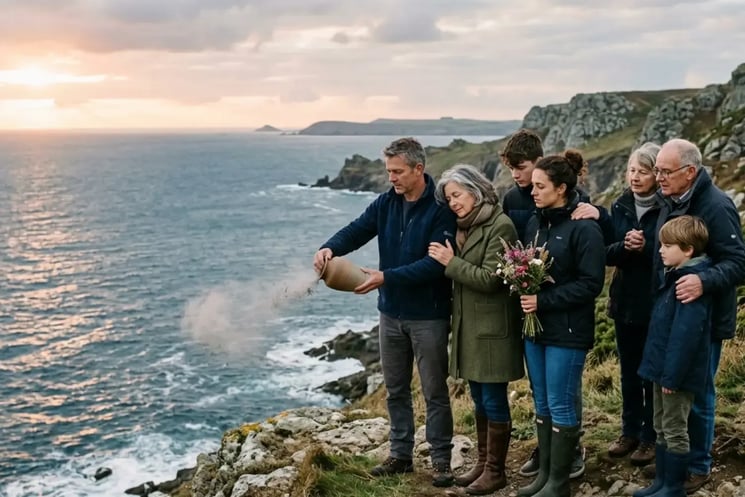

Choosing to scatter a loved one's ashes at sea is often a deeply personal decision. It might reflect a lifetime of holidays by the coast, a love of sailing, or simply a wish to feel close to the water. If you're planning this moment, it helps to understand what's allowed, what to bring, and how to make the day feel calm and meaningful rather than stressful — and, for many families, part of a wider celebration of their life. This article walks you through everything you need to know.
Can you scatter ashes at sea in the UK?
Yes, you can scatter ashes at sea in the UK. There's no UK-wide law that bans scattering ashes, and you don't need a licence to do so in tidal coastal waters.
This makes sea scattering one of the more straightforward options available to you. Many people choose it because the coast held special meaning for their loved one, or because it offers a sense of openness and continuity that feels fitting.
If you'd like to explore the fuller range of scattering locations, including gardens, mountains and other meaningful spots, our article on places to scatter ashes covers the wider picture. This article focuses specifically on scattering at sea.
Do you need permission or a licence?
You don't need formal permission or a licence to scatter ashes in tidal sea waters around the UK. This is a private, personal act rather than a regulated procedure.
However, the Environment Agency does offer guidance that's worth following out of respect for others and the environment. It recommends that you:
- Scatter away from buildings, swimmers and people fishing nearby
- Avoid marinas and busy harbour areas where possible
- Choose a calm day, avoiding strong winds so ashes don't blow back or affect people close by
- Scatter as close to the surface of the water as you can, rather than from a height
Following this guidance helps make sure your ceremony is peaceful and considerate, both for your family and for anyone else enjoying the coastline that day.

If you're still deciding what to do, our guide on creating a personal celebration of life covers a range of options beyond scattering.
Scattering ashes at sea vs burial at sea
It's easy to confuse scattering ashes at sea with burial at sea, but they're two very different things. Scattering ashes is the private act of releasing cremated remains into the water, and it doesn't require a licence.
Burial at sea is a separate and much more formal practice. It involves burying an entire, uncremated body in the sea, and it requires a licence from the Marine Management Organisation, along with strict conditions on location, coffin design and notification.
If you're arranging a farewell involving ashes, you don't need to worry about burial-at-sea rules at all. They simply don't apply to your situation, so you can focus on planning a ceremony that feels right for your family.
Where can you scatter ashes at sea?
You have real flexibility when it comes to choosing where along the coast to scatter ashes. The right spot often depends on personal meaning, accessibility, and how you'd like the day to unfold.
Below are the three most common ways families approach scattering ashes at sea, along with what to consider for each.
From a boat or vehicle
Scattering from a boat is a popular choice, especially if your loved one had a connection to sailing, fishing or the wider sea. It also allows you to scatter well away from the shoreline, swimmers and other beachgoers.
You can arrange a small private boat trip through a local charter company, or ask a marina if they offer scattering trips. Some companies specialise in these ceremonies and can guide you through timing and location.
Once on the water, scatter close to the surface rather than from a height, and let the ashes settle naturally with the current. Many families take a moment of quiet reflection, read a few words, or simply sit with the silence together.
From a beach or shoreline
Scattering from a beach is often simpler to arrange, particularly if travel by boat isn't practical for your family. Many coastal towns and beaches across the UK are used for this purpose.
The beach itself, between the high and low water marks, is generally owned by the Crown, so you're usually free to scatter there. If the beach is privately owned, though, you'll need to ask the landowner's permission first.
Choose a quieter stretch of coastline away from busy tourist spots, and try to go at a time of day when fewer people are around. Early mornings often work well for a calm, private moment.
From a pier or harbour area
Piers and harbours can hold special meaning, particularly for families with a strong local connection to a specific town or fishing community. They also offer easy access without needing a boat.
That said, harbours are often busy working areas, so it's worth checking with the harbour master before scattering ashes there. This helps you avoid areas with heavy boat traffic or moored vessels close by.
If a pier or harbour feels too public or exposed, a quieter nearby beach or a short boat trip further out may offer a more private alternative.
Environmental guidance and biodegradable urns
Only biodegradable materials should go into the sea.
Wreaths, ribbons and other keepsakes shouldn't be placed in the water, even if they feel meaningful, as they're treated as litter and can harm marine wildlife. Loose flower petals are generally more acceptable, though it's worth checking any local guidance first.
Many families now choose an eco-friendly approach more broadly, from biodegradable urns to simpler, low-impact ceremonies. If this matters to you, our article on green funerals explores other environmentally considerate choices you might want to explore alongside sea scattering.
Practical tips for weather, tides and safety
A little planning goes a long way toward making the day feel calm rather than rushed. Check the weather forecast in advance, and choose a day with light or no wind so ashes settle gently rather than blowing back toward you.
Tides matter too, particularly if you're scattering from a beach. An outgoing tide can help carry the ashes away from the shore, so it's worth checking local tide times before you go.
If you're heading out on a boat, dress warmly and wear suitable footwear, as coastal conditions can change quickly. It's also sensible to let someone know your plans if you're going somewhere remote.
Finally, give yourself space and time. There's no need to rush the moment, so build in time afterwards simply to be together, share memories, or sit quietly by the water.
How we can support your family after cremation
At Pure Cremation, we know that what happens after the cremation matters just as much as the service itself. Our pure cremation is a funeral without a ceremony at the crematorium, which gives your family the freedom to arrange a scattering ceremony, or any other farewell, in your own time and in your own way.
We return your loved one's ashes to you personally and by hand, in a permanent, biodegradable urn, along with an individually numbered ceramic disc that confirms their identity throughout the process. From there, you're free to scatter, keep, bury, or place the ashes wherever feels right — and if you'd like help thinking through how to mark that occasion, A Fine Farewell can guide you through planning a send-off that feels right for your family.
Frequently asked questions
Is it legal to scatter ashes at sea?
Yes, it's legal to scatter ashes at sea in the UK, and no licence is required in tidal coastal waters. It's worth following Environment Agency guidance around location and weather out of consideration for others.
Do ashes pollute the sea?
Cremated ashes themselves aren't considered harmful pollutants in the sea. The main environmental concern is what's scattered alongside them, so it's important to use only biodegradable urns and avoid items like plastic wreaths or metal keepsakes.
Can you scatter ashes on a beach?
Yes, you can scatter ashes on most UK beaches, as the foreshore between high and low tide is generally Crown-owned and publicly accessible. If the beach is privately owned, you'll need to ask the landowner for permission first.
What should you say when scattering ashes at sea?
There's no set wording, so you can keep things as simple or personal as feels right. Some families read a favourite poem or a few personal words, while others prefer a quiet, silent moment together.
Can you put flowers in the sea with ashes?
Loose flower petals are often acceptable, but whole flowers, wreaths and ribbons aren't, as they can be treated as litter and may harm marine life. If flowers matter to your ceremony, it's best to scatter petals only, or leave them on the beach rather than in the water.