
Robin songs and calls
What that beautiful birdsong is really saying
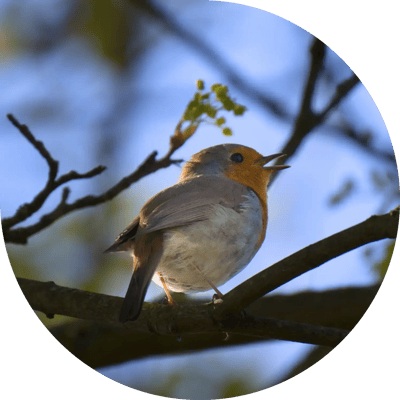
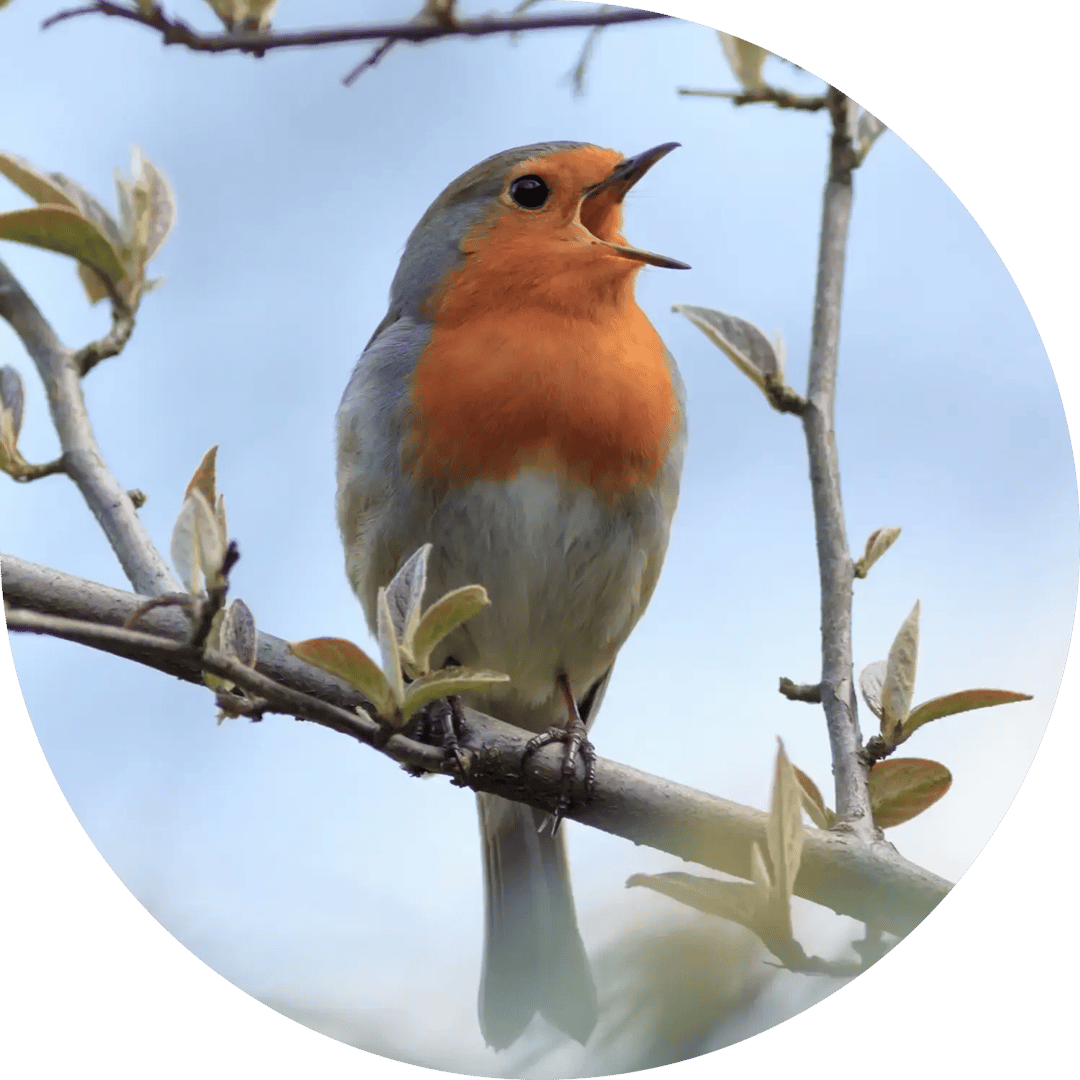
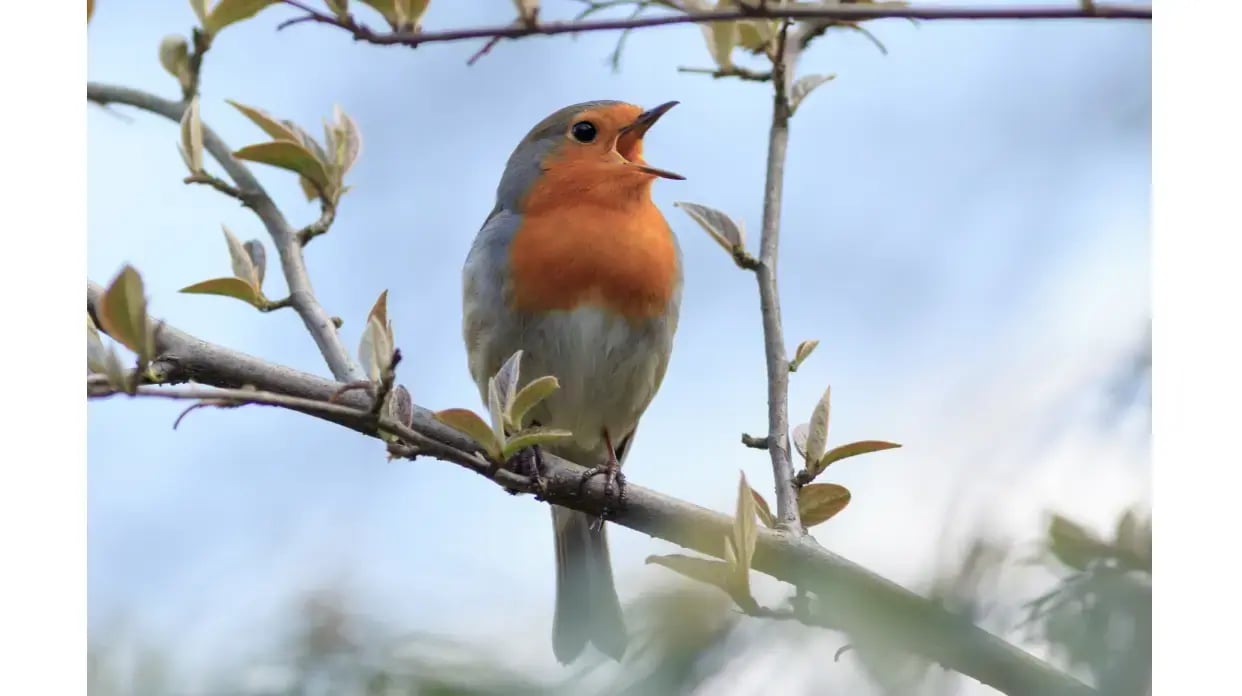
The robin is one of the first voices of the morning and one of the last at dusk. Its song — clear and melodious — is one of the most familiar sounds in the British countryside. But robins don't just sing for the pleasure of it.
Their calls carry real meaning, and once you start listening more carefully, the garden sounds completely different.
Robins are one of the most familiar birds in the UK.
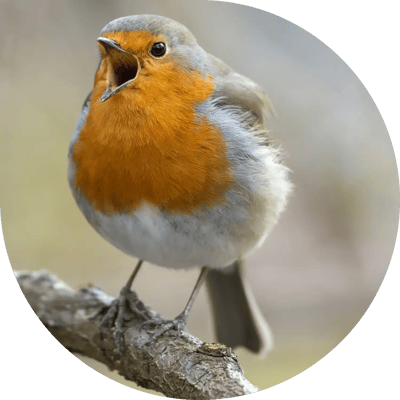
Unlike most songbirds, both male and female robins sing. You'll hear them in spring and summer, in autumn and even on crisp winter mornings. Each song has a purpose.
Robins use song to do two main things: attract a mate and defend their territory. They hold their patch year-round — not just during the breeding season — and song is their first way of warning rivals to stay away.
A robin singing steadily from a fence post or a high branch is usually making a statement. It's telling every other robin within earshot exactly where its territory begins and ends.
At Pure Cremation, the robin is our mascot. You might have heard the saying 'robins appear when loved ones are near'. We like this symbol of reassurance and companionship when things feel heavy or difficult.
The territorial song
The robin's territorial song is rich and varied. It carries surprisingly far for such a small bird.
Interestingly, female robins are also highly territorial outside the breeding season. In autumn, both males and females establish their own winter patches and defend them with song. This makes robins one of the few British songbirds where both sexes sing regularly.
Why robins sing in winter
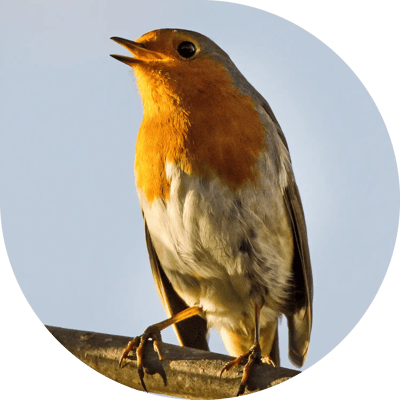
Most garden birds go quiet once the breeding season ends. Robins are different. On a cold January morning, you may still hear a robin singing from bare branches — softer than the full spring song, and many people find it more melancholy.
It's this winter song that often stops people in their tracks. There's something about hearing it against frost and stillness that feels different. The robin is simply getting on with things, whatever the weather.
The alarm call
If you hear a sharp, rapid 'tic-tic-tic' from somewhere in the undergrowth, that's a robin's alarm call. It usually means a predator — a cat, a sparrowhawk, or a fox — is close by.
Robins are highly alert to threats, and their alarm calls are often the first warning other garden birds get. You might also hear a thin, high-pitched 'seep', which is harder to locate — useful when you don't want to give your position away.
To find out more about how robins behave throughout the year, see robins through the seasons and a robin's life.