

.png?width=500&height=500&name=Frame%201%20(5).png)
%20(1).webp?width=1294&height=725&name=Robin%20mobile%20pic%20(1)%20(1).webp)
A robin’s life: From first feather to final flight
Exploring how robins live, grow, and shape the world around them
While they hold deep meaning for many, robins are also living creatures with their own journeys. Understanding a robin’s life helps us appreciate both the comfort they bring and the reality of the world they move through.
Robins are one of the most familiar birds in the UK.
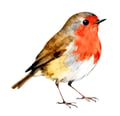
You’ll see them hopping across lawns, perched on fence posts, or waiting patiently while the garden is turned over. They’re small, confident, and often surprisingly close by.
They also carry a lot of meaning. In folklore, robins have long been associated with hope and comfort. Many people believe that robins appear when loved ones are near – a sign of presence at a time when someone is deeply missed.
At Pure Cremation, that belief matters to us. It’s why the robin is our mascot, acting as a symbol of reassurance and companionship when things feel heavy.
At the same time, robins are living creatures with full, demanding lives of their own. Looking closely at how a robin lives – from hatchling through to adulthood and, eventually, death – helps us understand not just what they represent, but what they endure and contribute along the way.
From egg to hatchling: The start of life
A robin’s life usually begins in spring. Nests are built low to the ground, often hidden in hedges, sheds, flowerpots, or tucked into corners of gardens. They’re practical rather than pretty, built to keep eggs safe and sheltered.
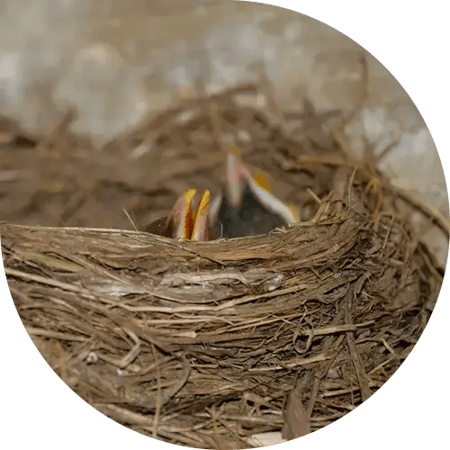
The female lays around four to six eggs and incubates them for roughly two weeks. Once the chicks hatch, they are completely helpless. They have no feathers, can’t see, and rely entirely on their parents.
Both parents feed the chicks almost constantly, bringing insects and worms from early morning until evening. It’s an exhausting few weeks, and not all chicks survive. This is a difficult but natural part of a robin’s life, shaped by weather, predators, and limited food.
Learning to survive: The fledgling stage
.webp?width=450&height=450&name=Frame%201%20(1).webp)
After around 13 to 15 days, the young robins leave the nest. At this stage, they’re called fledglings. They don’t look like the robins most people recognise, because their feathers are brown and speckled, without the familiar red breast.
Fledglings often spend time on the ground or on low branches. They’re learning how to fly properly, how to find food, and how to stay safe. Their parents remain close, continuing to feed them and keeping watch as best they can.
This is one of the most vulnerable points in a robin’s life. Many don’t make it through this stage, but those who do are well on their way to independence.
Growing into adulthood
As summer goes on, young robins moult and begin to develop adult plumage. The red breast appears after their first full moult, usually towards the end of summer or in early autumn.
With adulthood comes a change in behaviour. Robins are strongly territorial and tend to live alone. Once they’ve claimed a patch, they’ll defend it year-round.
This is why robins can often be heard singing even in winter. Their song isn’t just about attracting a mate, but about holding their ground.
.webp?width=450&height=450&name=Frame%201%20(2).webp)
Where robins go and how they live
.webp?width=450&height=450&name=Frame%201%20(3).webp)
Most robins in the UK stay close to where they were born. They don’t migrate long distances, although some may move locally during colder months to find food.
Robins adapt well to life around people. Gardens, parks, and woodlands provide shelter and reliable food sources. They eat insects, worms, berries, and seeds, and are well known for following gardeners in the hope of an easy meal from freshly turned soil.
How long do robins live?
The average robin lives for around one to two years. This shorter lifespan is largely due to the high risks faced in their first year of life. Those that survive past this point have a better chance of living longer, with some reaching five or six years.
Predators, cold winters, and food shortages all play a role, but despite these challenges, robins remain widespread and stable across the UK. Their resilience is part of what makes them such a constant presence.
To learn how you can support robins throughout the year, explore our guide to robins through the seasons. It offers tips to help robins thrive at every stage of the year.
.webp?width=450&height=450&name=Frame%201%20(4).webp)
The end of a robin’s life
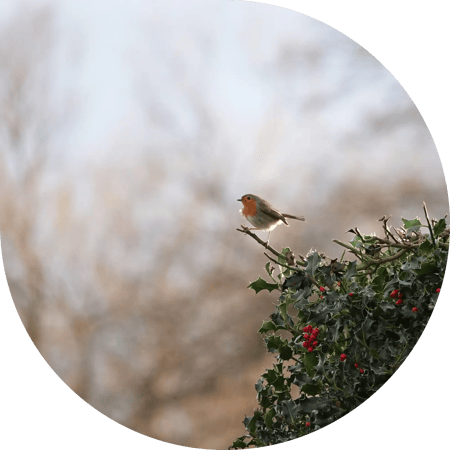
Like all living things, a robin’s life comes to an end. For most, this happens quietly and out of sight.
While it can feel sad to think about, it’s also part of a wider cycle. Each robin, however brief its life, contributes to the world around it – raising young, supporting the ecosystem, and offering moments of connection to the people who notice them.
Robins don’t live loudly or dramatically. They simply get on with things, day after day. And perhaps that’s why they mean so much. For some, a robin is just a bird in the garden. For others, it’s a reminder of presence and continuity – small, but deeply felt.